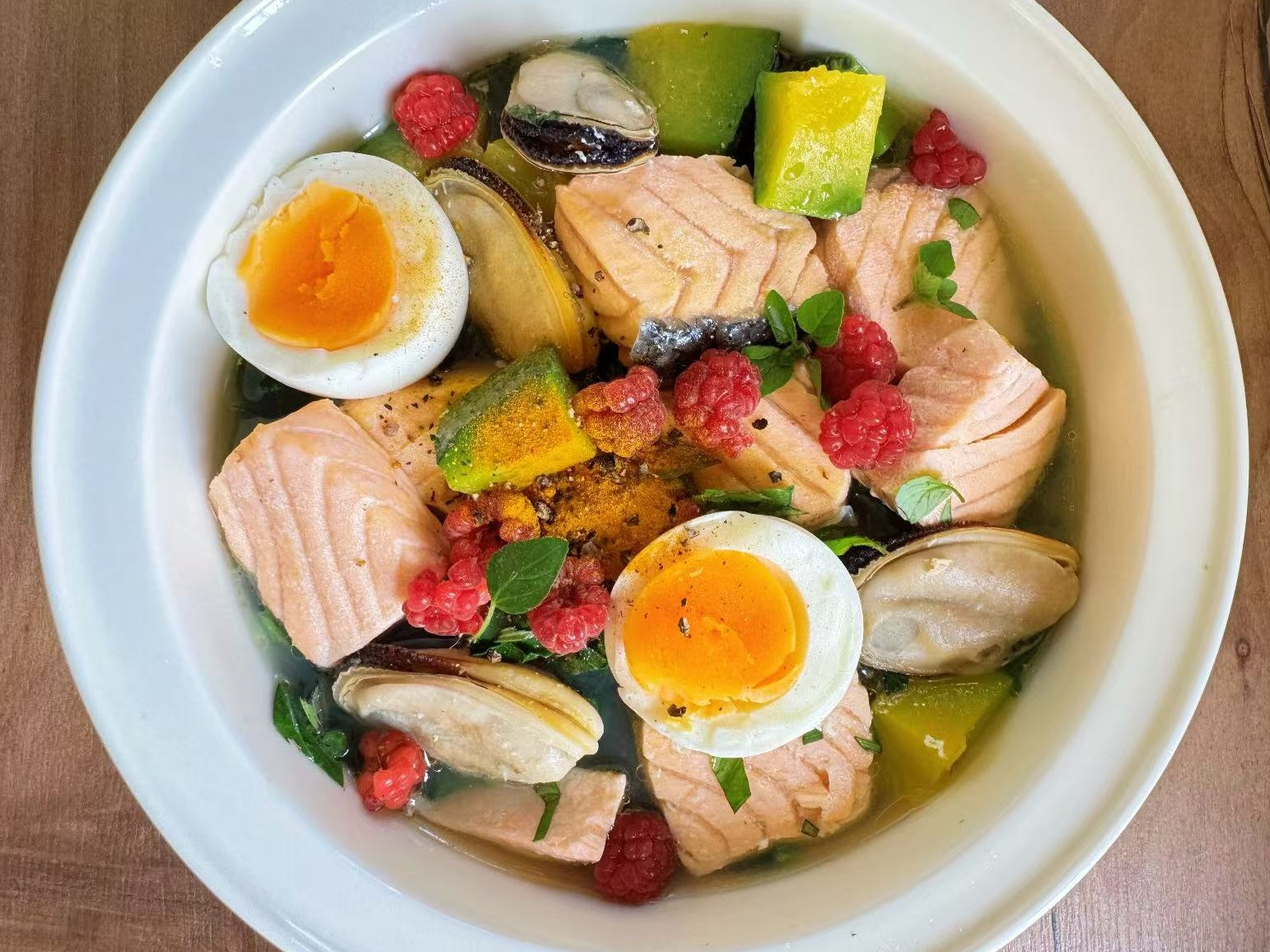
A few days ago, I took Mochi (my 7.5-year-old Yorkshire Terrier) for a routine vet checkup. During the abdominal ultrasound, the vet suddenly looked up and asked,
“What kind of food do you usually feed your dog?”
“I don’t feed him commercial dog food. I cook for him myself.”
“You feed him human food?”
“No, not human table scraps. It’s a balanced, home-cooked diet.”
“What exactly goes into it?” “Meat, vegetables, organ meats…”
“What kind of meat?”
At this point, I started getting nervous. The vet was asking for so much detail—I couldn’t help but wonder if something was terribly wrong with the food I’d been making all these years.
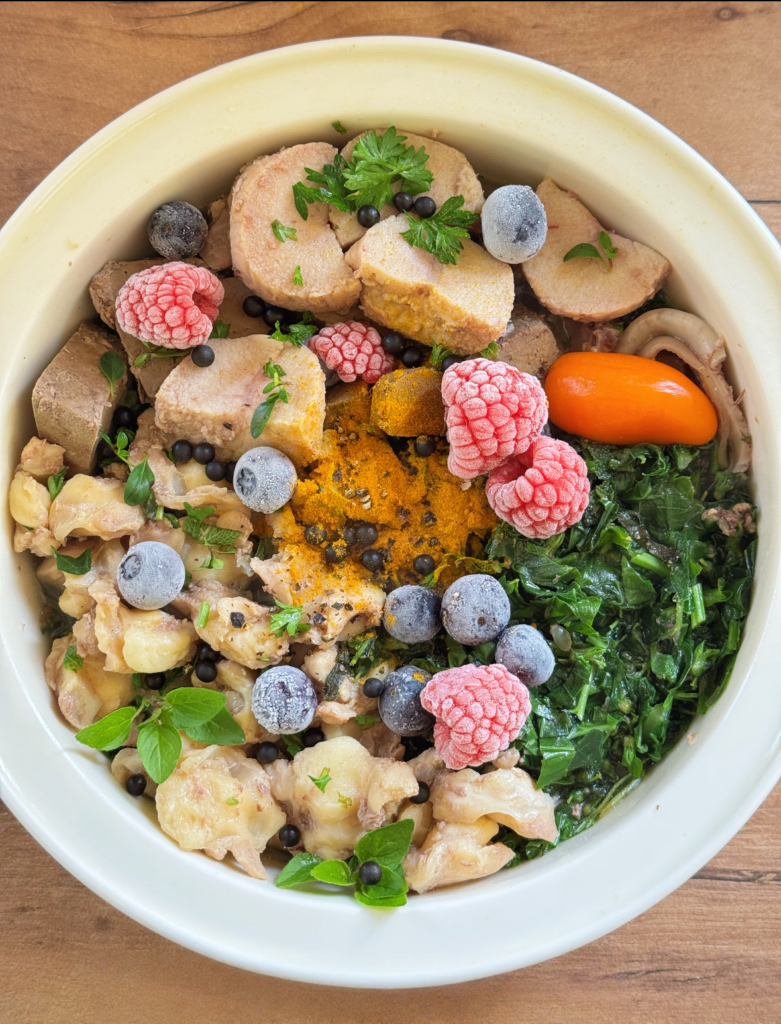
“For a dog his age, Mochi’s gallbladder is incredibly healthy. That’s why I wanted to know what your secret is,” the vet said.
Talk about a false alarm…
But honestly, I couldn’t explain the exact formula to the vet right then and there. His diet is both simple and complex, using ingredients that are common yet precious. It’s a paradox that not everyone quite gets.
After this checkup, and with his bloodwork coming back absolutely flawless, I’ve done some deep-dive research into the gallbladder and its surrounding organs (since the gallbladder is basically the pancreas’s neighbor and partner-in-crime). I now feel confident enough to say that the “pancreatitis prevention diet” I designed for Mochi actually works. Even if Mochi were just an isolated success story, I’d still want to share this post for other pet parents to see. But I know he isn’t. When I first brought him home, his bloodwork at his three-month checkup was shockingly bad.
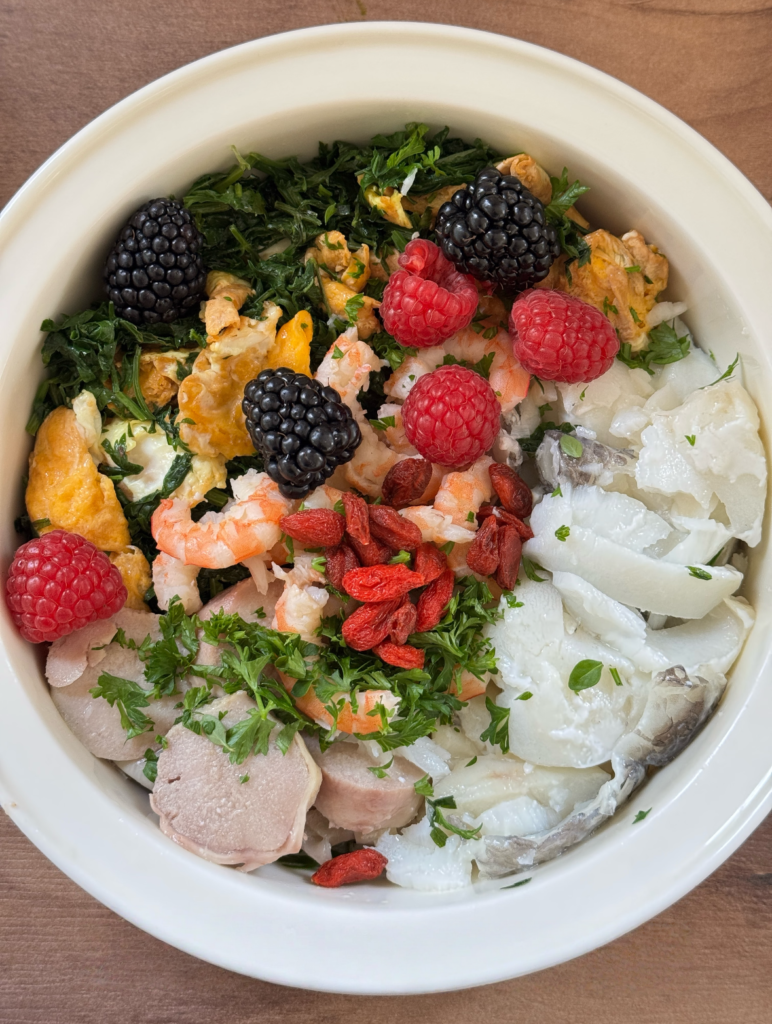
Since Yorkies are notoriously prone to pancreatitis, I started researching preventative recipes early on. Here are the core principles I’ve learned along the way:
1️⃣ Avoid High-Fat Foods: Stay away from all visible fat (like fatty meats or marbled cuts). Most of the healthy fats Mochi gets come from deep-sea fish.
2️⃣ Avoid High-Carb Foods: Skip the sweets, rice, and flour. Instead, opt for moderate amounts of high-quality carbs, specifically root vegetables.
3️⃣ Up the Veggie Intake: Vegetables make up 50% of Mochi’s total daily intake. Crucial point: Leafy greens make up a huge percentage of those veggies.
4️⃣ Incorporate Anti-Inflammatory & Antioxidant Foods: Turmeric powder (the whole spice, not turmeric extract), black pepper, and herbs (basil, parsley, rosemary, thyme, oregano…) are daily essentials. A tiny amount goes a long way.
5️⃣ Deep-Sea Fish at Least Thrice a Week: Rotate between salmon, mackerel, saury, sardines, and black cod. Quality is everything here. Poor-quality deep-sea fish run the risk of oxidized fat and heavily degraded EPA/DHA levels.
6️⃣ Diversify the Ingredients: Variety not only ensures balanced nutrition and a healthy gut microbiome, but it also keeps the entire metabolic system running smoothly. Aim for more than ten different whole foods a day—excluding mass-produced commercial chicken breast and any ultra-processed foods.
7️⃣ Feed Some Raw Vegetables: If you can’t source safe raw veggies, sprout microgreens at home instead. Also, keep a steady supply of fresh blueberries and raspberries in rotation. This serves the same powerful antioxidant purpose as step 4️⃣.
These are just the main points that come to mind right now, and I’ll add more as I think of them. For our fur babies, prevention is always better than a cure. Here’s wishing all the little puppies out there a long, healthy, and happy life!